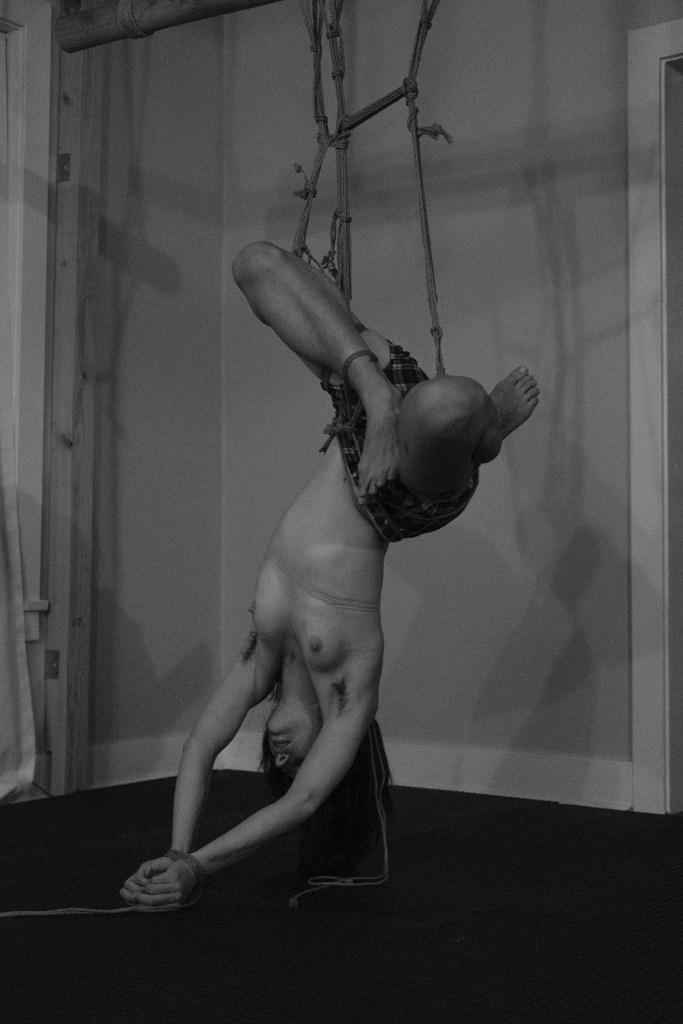
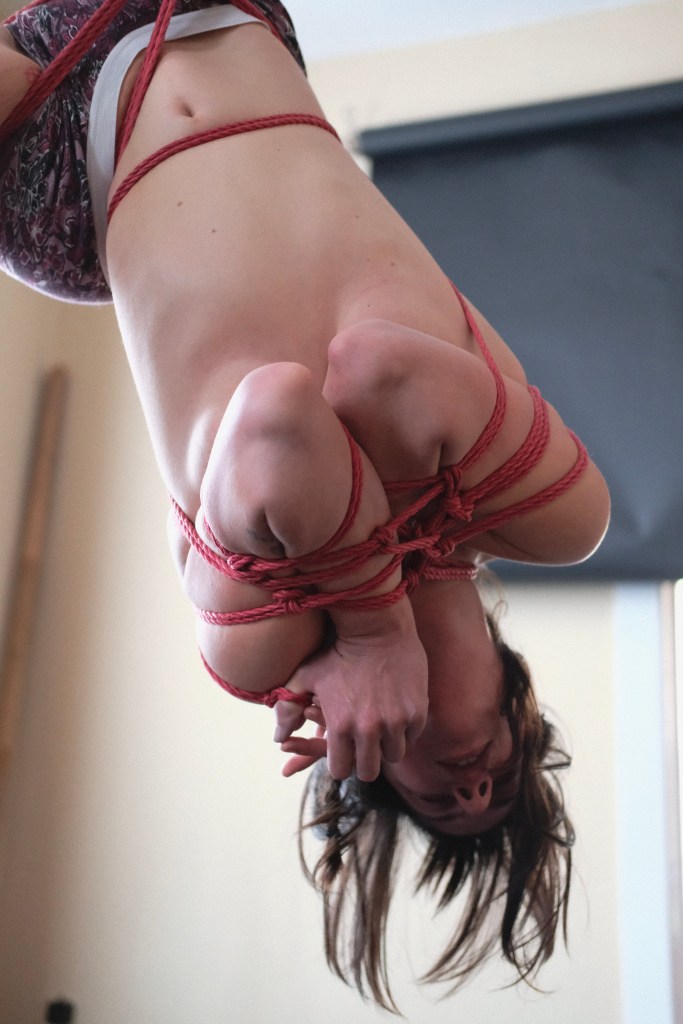
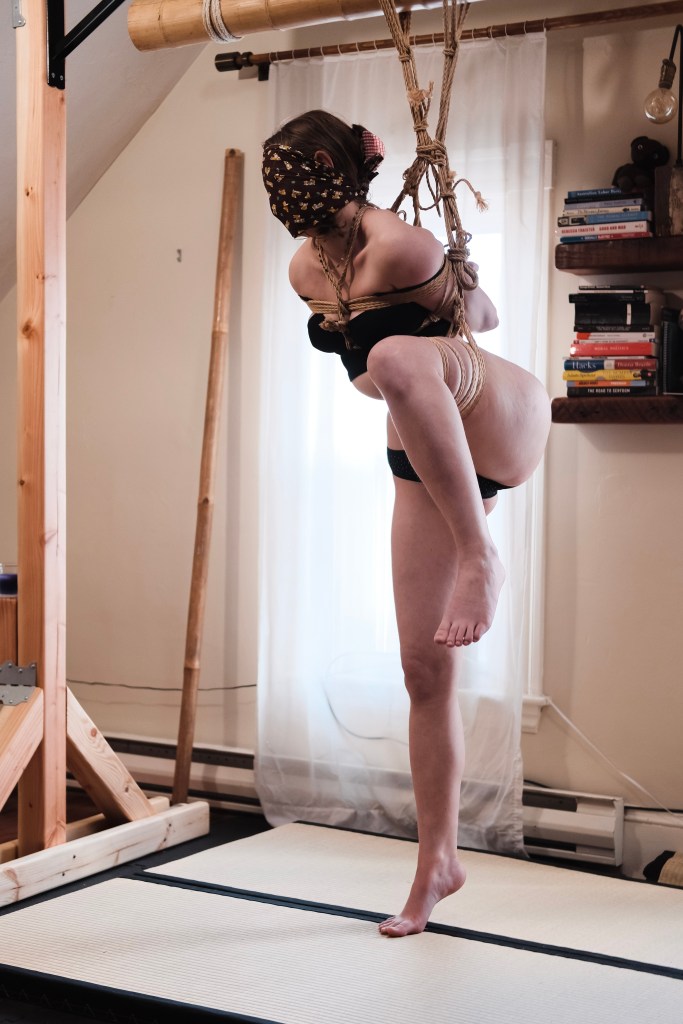
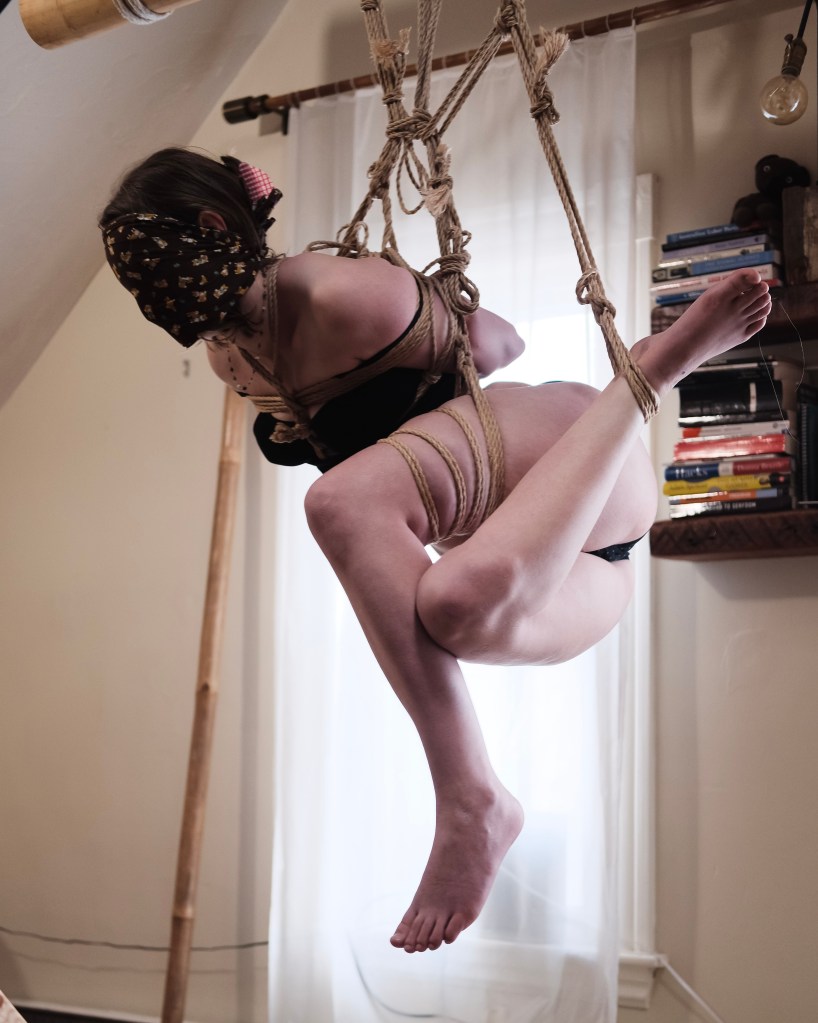
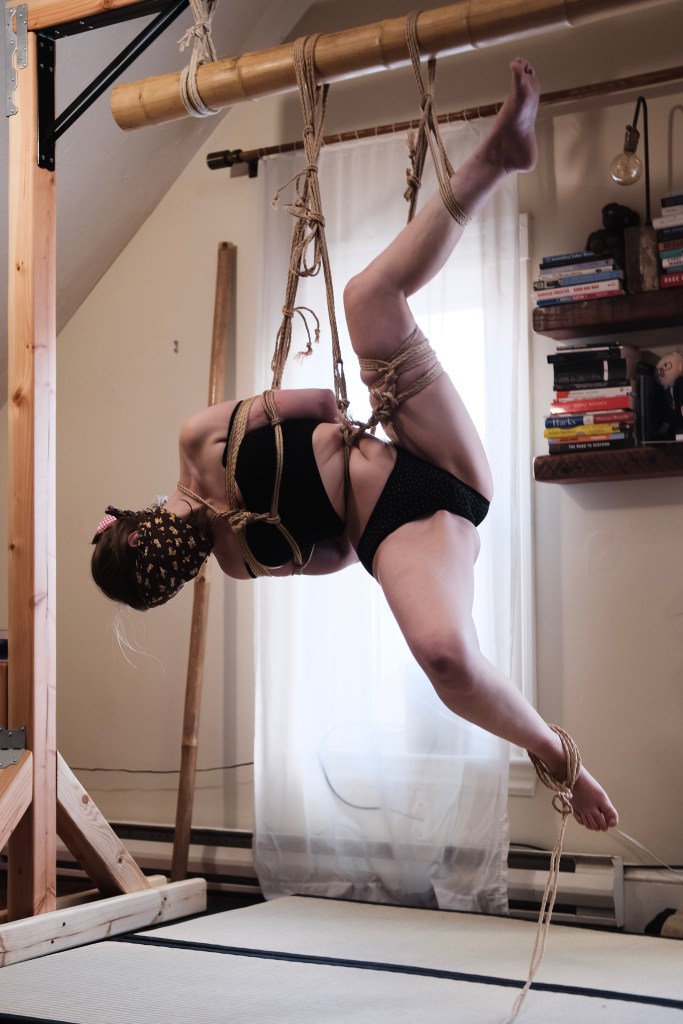
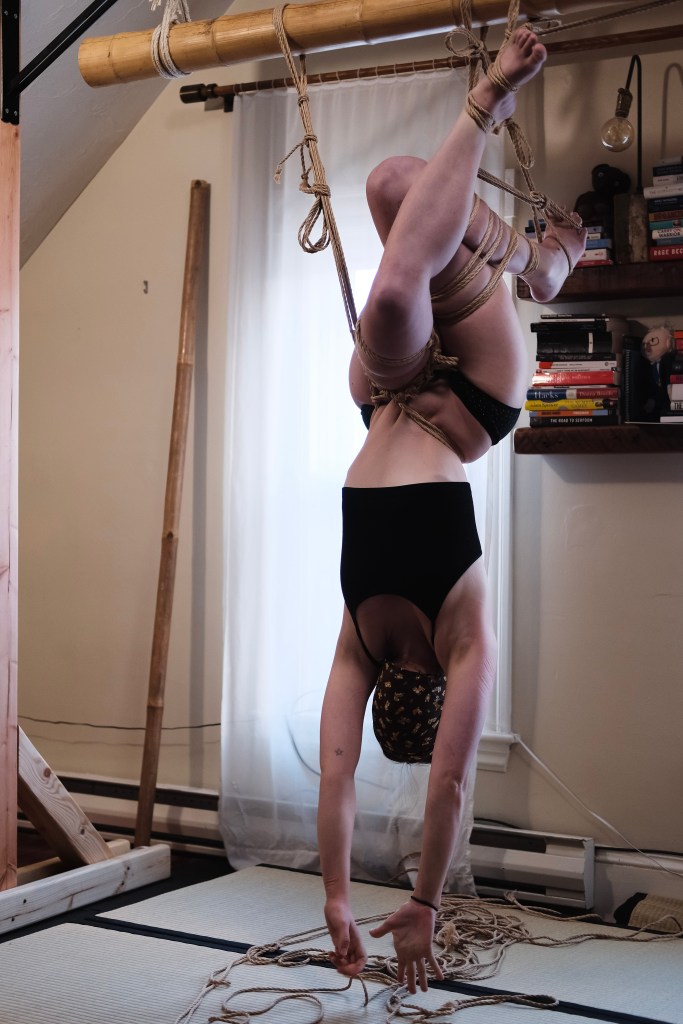
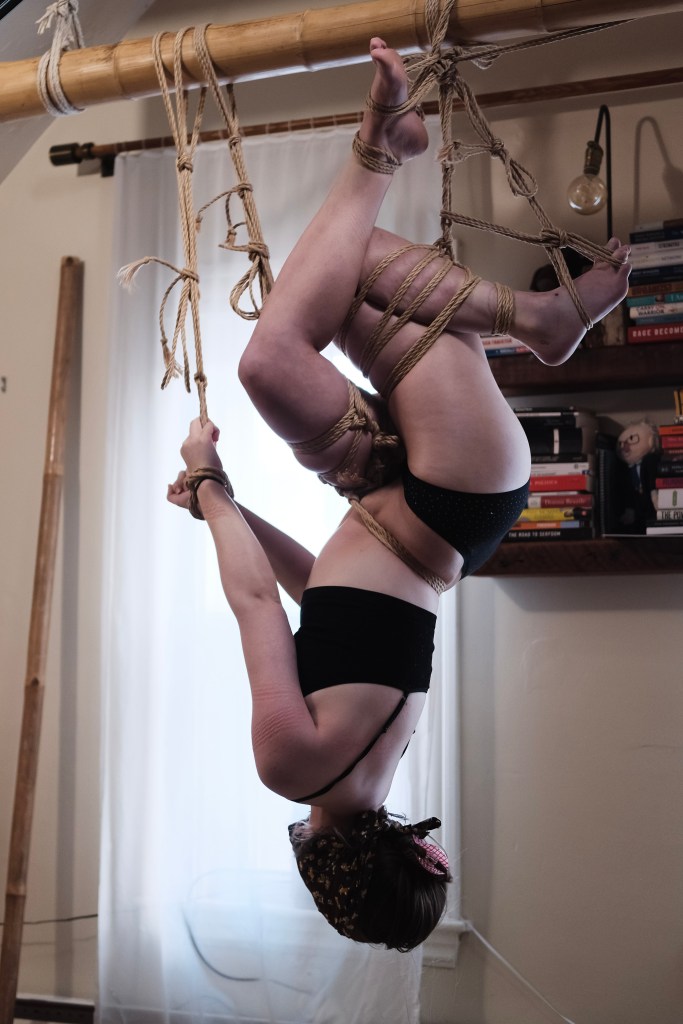
Flight Log | March 13, 2023

Random thoughts, however they came –

Sometimes 3AM comes too quick to believe. On the backside of an adult birthday, the pulse tapers off in waveform. One big spike of bodies and the slow drip as they check their watches and leave. You the newly married, and the soon to be married, run first. Then the working stiffs. Then the comedians. Your best friend closes the chapter on his Saturn’s return and cries a little as he tucks you in. You miss the shift change. 

The shift change 

When the clock rings five times you can find yourself at the meeting of two worlds. Those who rise very early to run or meditate or escape their children or whatever. And those who stay up very late to drink, fuck, and make more children to dodge. They cross paths on the sidewalk and share a disdainful look. Each type knows who is his kin and who is the enemy. Clyde on his corner observes over the ritual nodding of heads in a wizened silence. I buy him a coffee as my toll. He says “God bless” I say “who sneezed.” 

A sneeze in time 

In a borrowed car whose odometer spun herself back around to null, we fill the tank with LPG and hurtle along the narrow roads like a bomb. You talk about how when we were children the air was full of insects that would get stuck in the grill of this very car. I remember that too, or I pretend to. The teenage hitchhikers nod in polite acknowledgement of these stories, but they don’t speak English so who really knows. The boy from Poland and his companion from Bangladesh whisper together in the language of roads. They are aiming for the town named “Spring” in a country full of them. It isn’t accessible by train nor car, so they will have to walk or take their chances with the townie cart drivers. We try to explain but they just shrug and give a hearty “Hakuna Matata” 

Hakuna Matata

They kiss, they thank us, they leave. I feed you a puff of highly processed corn product mixed with peanut byproduct. I beg you to drink more water. The parking tastes like battery acid and spit. We don our astronaut helmets in the early semi-darkness of the field, and shake our heads at the young shepherd on last night’s guard duty. Someone has been killing cows. Someone snuck a sticker onto the bumper of our car. You try in vain to scrape it off, and decide to live with it. We share the world with all manner of things, some of them inanimate. At least this one can travel. 

On the road 

You pass by mile after mile of rattling highway, each one turning the volume up just a bit louder on the engine noise until it reaches a terrifying hum. You live in the easy rhythm of waking, driving, burnt coffee, and finding the next place to sleep. You relented early on keeping your cat in her carrier, so she roams about the cab. Mostly, she burrows down under the duvet and hides from the sun that follows you but never stays aloft for long. You see most of Utah in the dark. You flash your beams at the other 5 AM drivers in a greeting. You try to stay awake. 

Awake

You wake up in a borrowed house you’ve systematically painted green. A kitchen is torn out and added back in. Layers of renovations are pried up and patched over. The cat looks for new things to watch. She lunges at shadows on the wall and cries, though you can’t ask her why. You wonder if she misses home and why you can’t seem to come back to yours. Your friend turns 28 with you to follow, and he cries as he tucks you in. She chases a ladybug.

Innocence

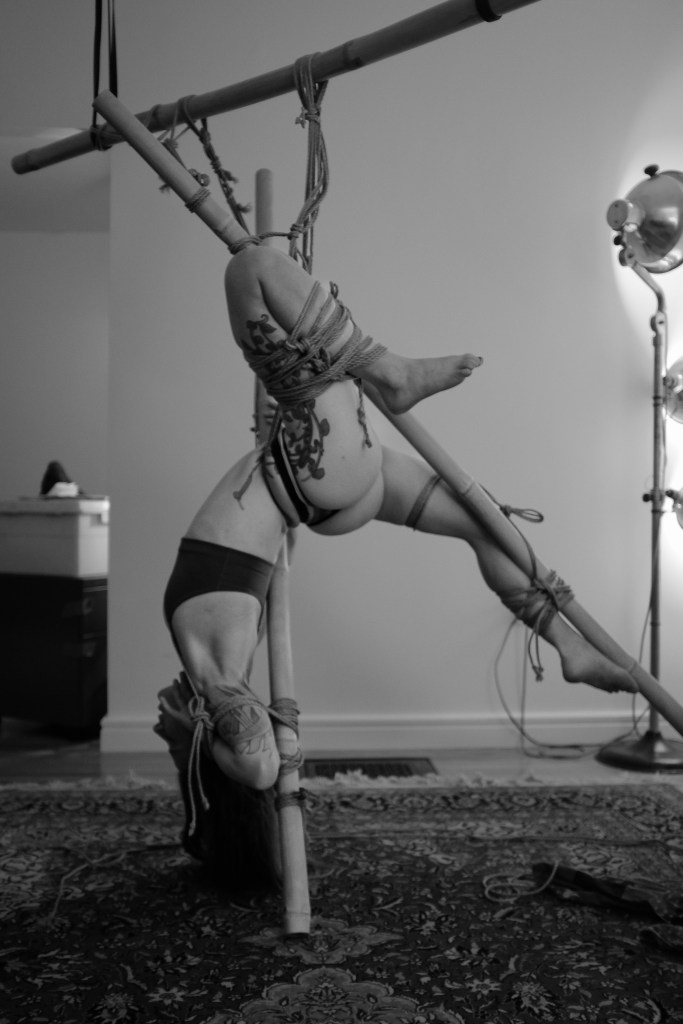
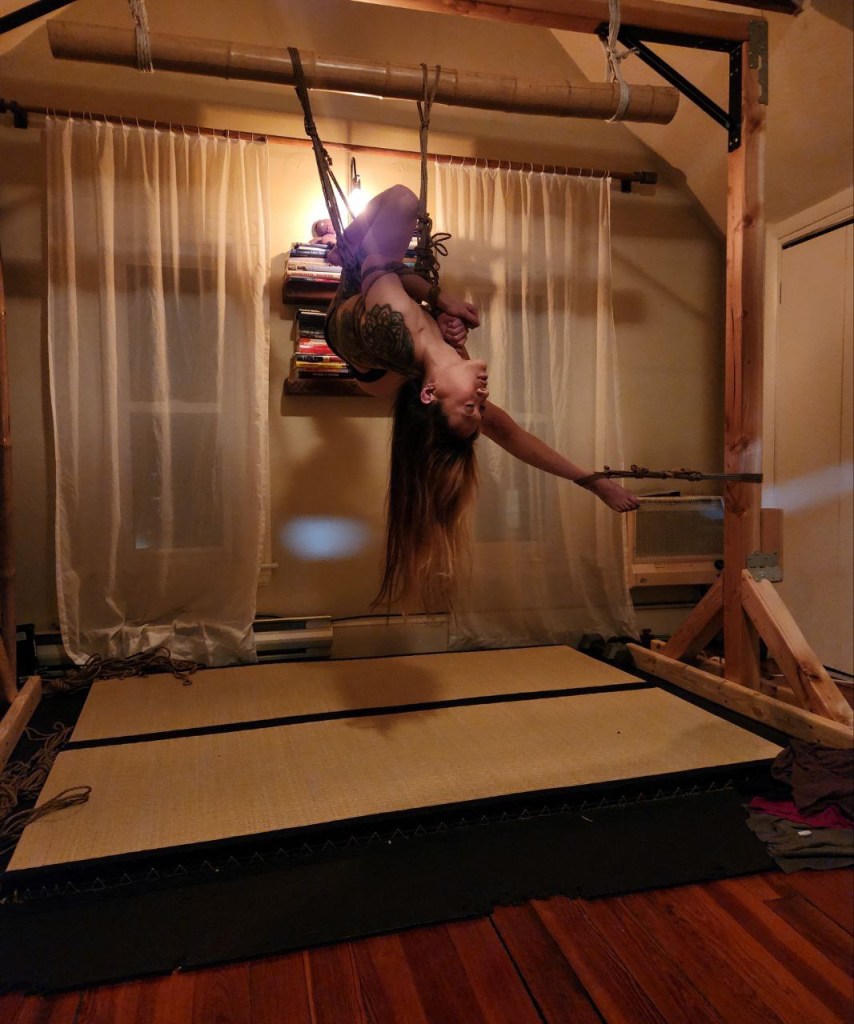
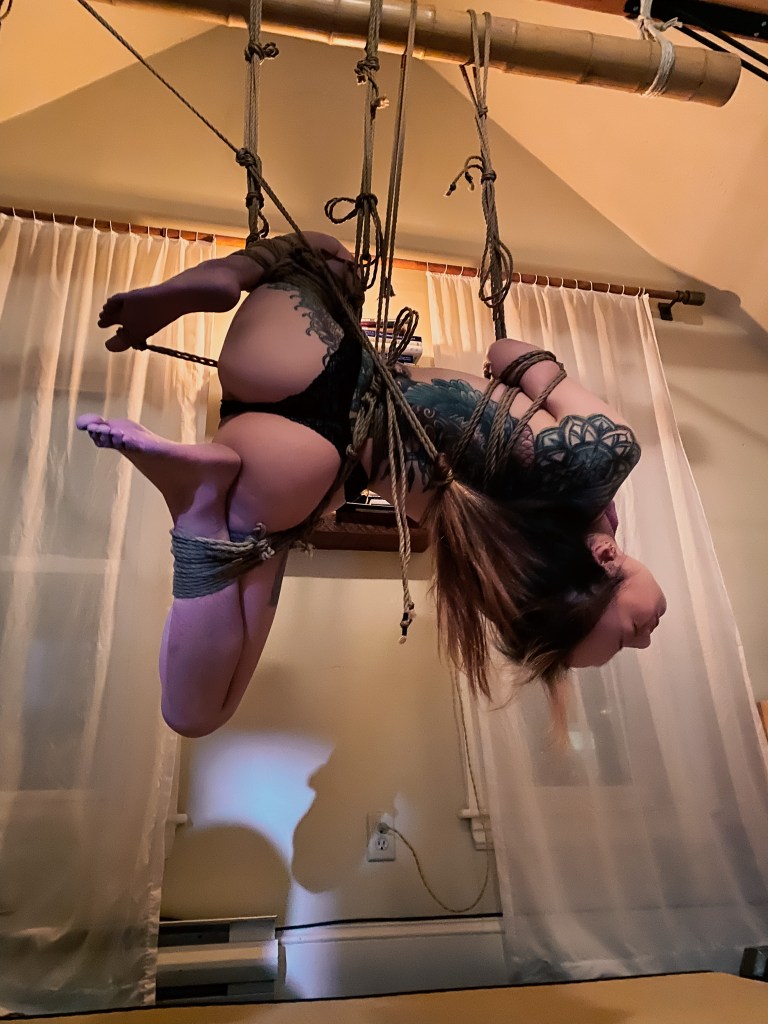
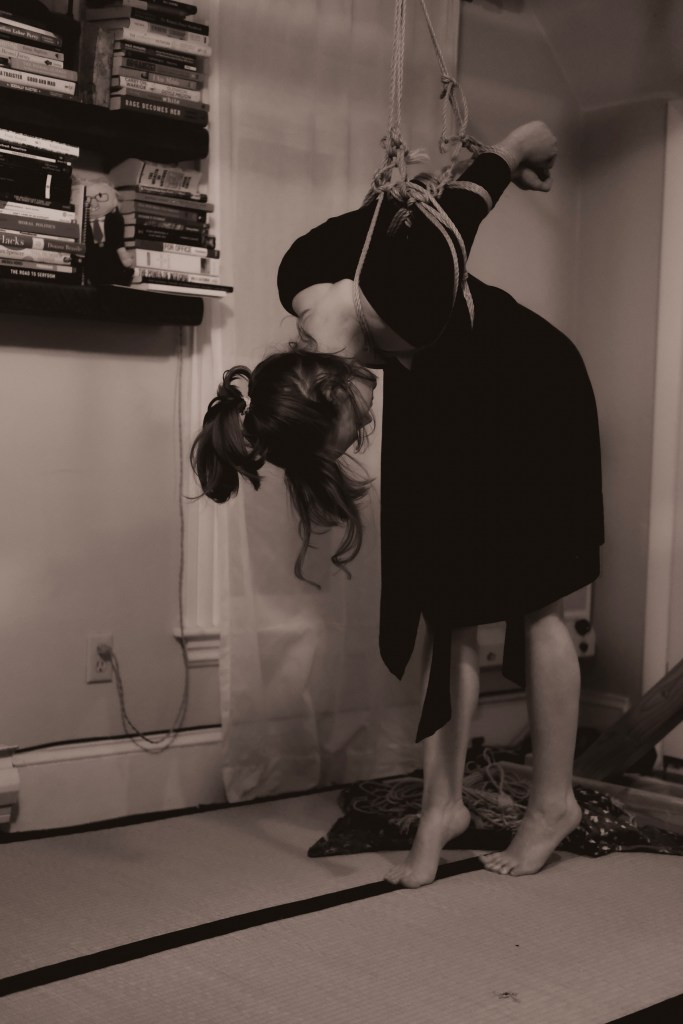
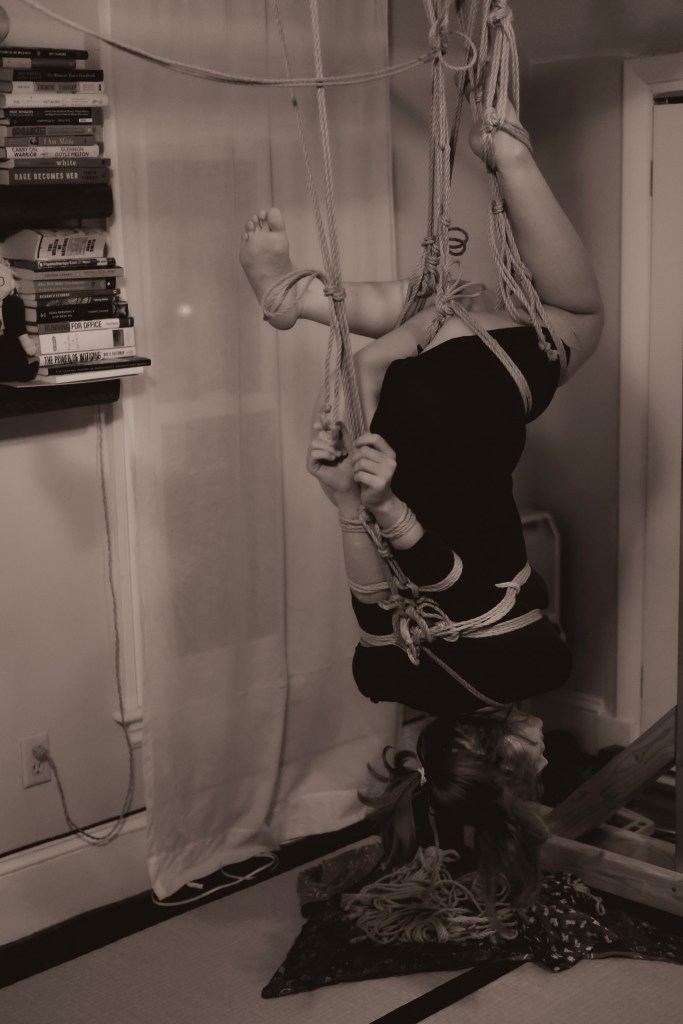
With borrowed ropes, borrowed rig, and borrowed camera.

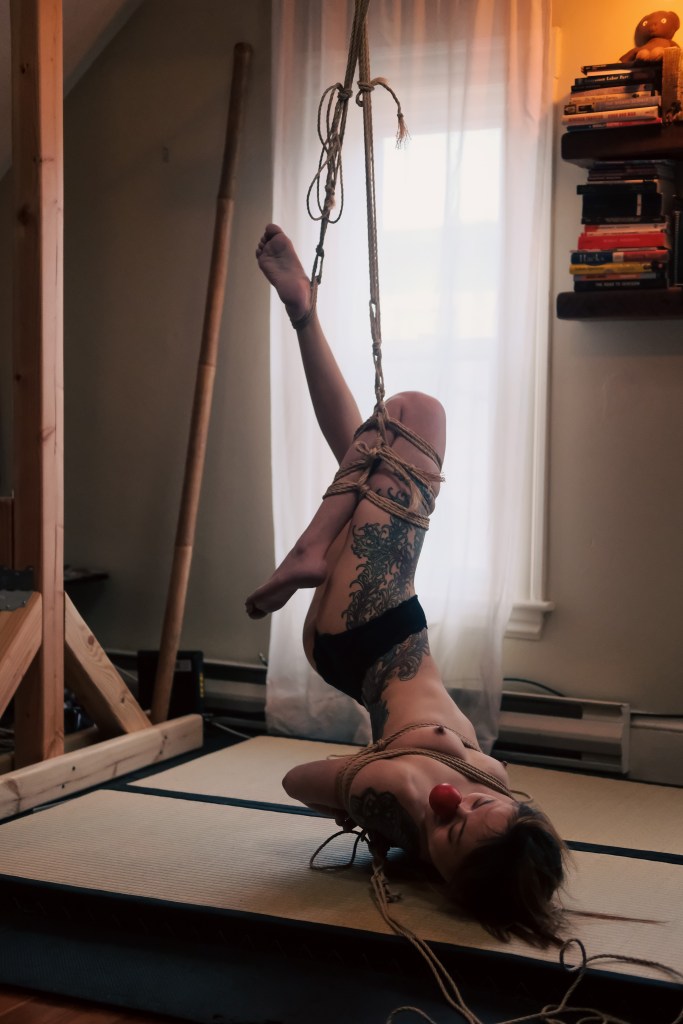
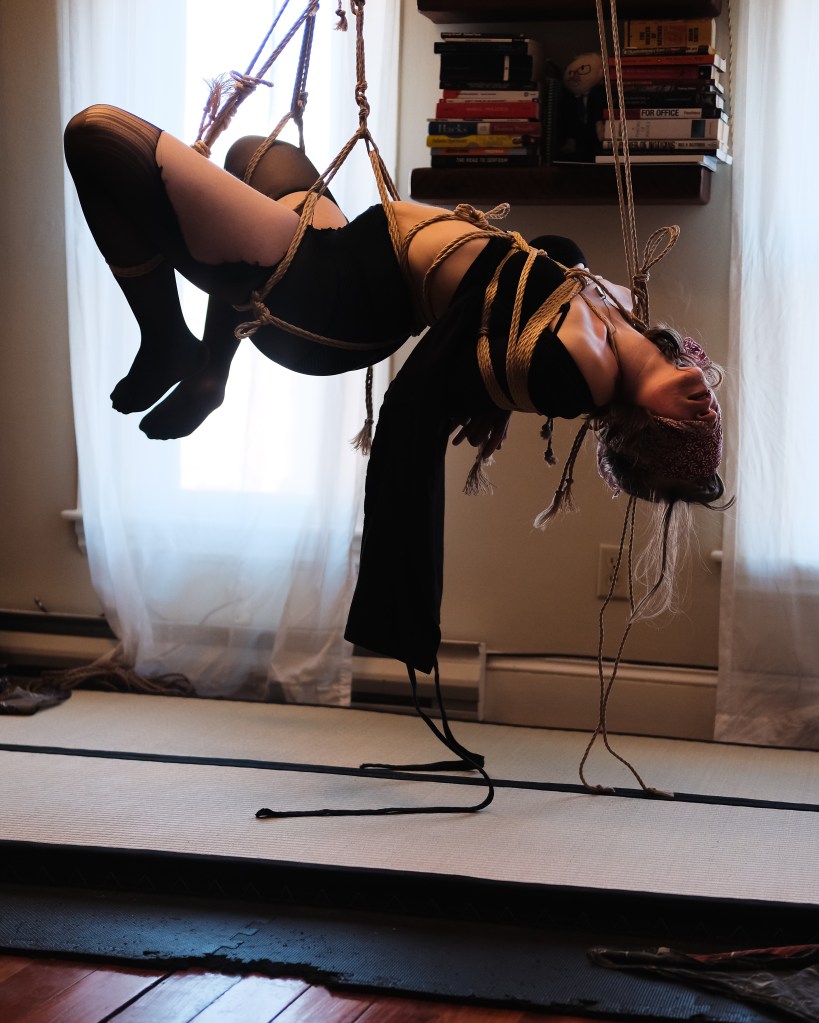
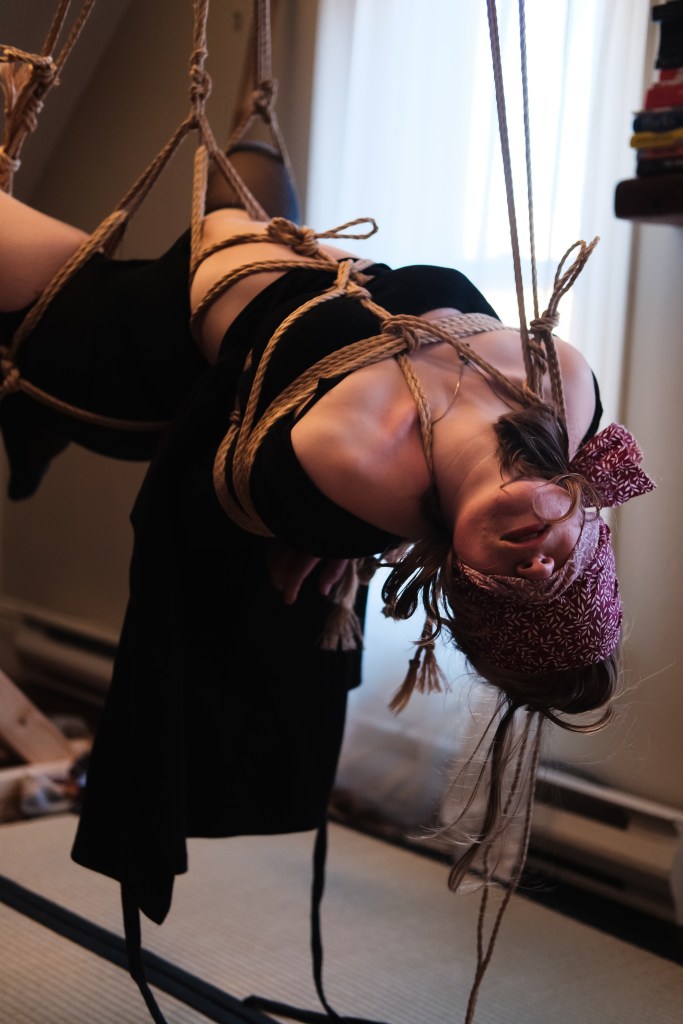
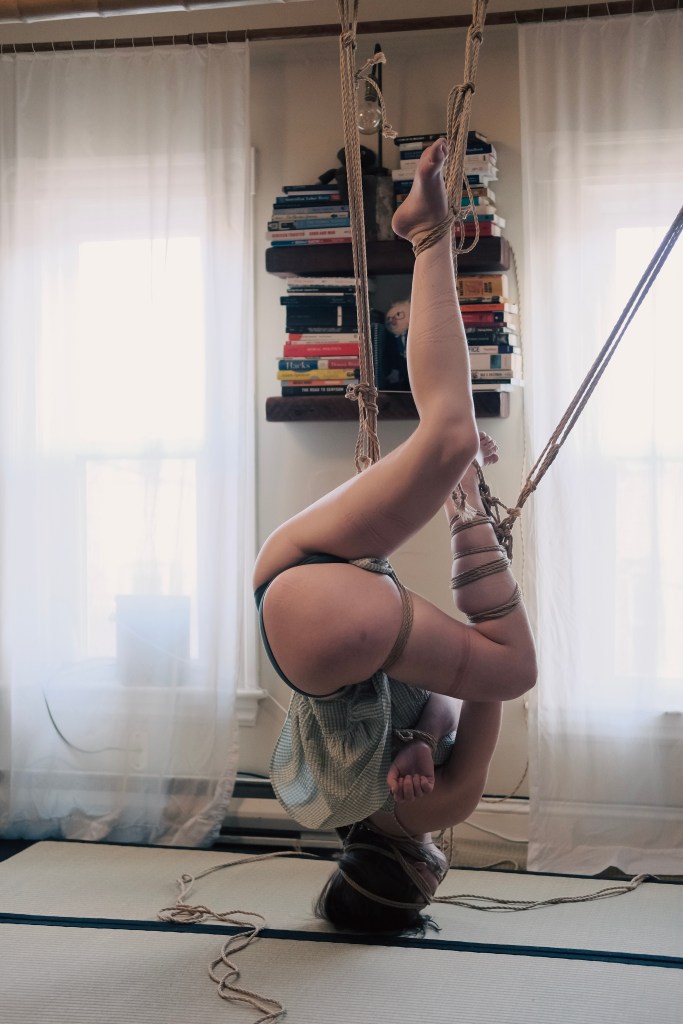
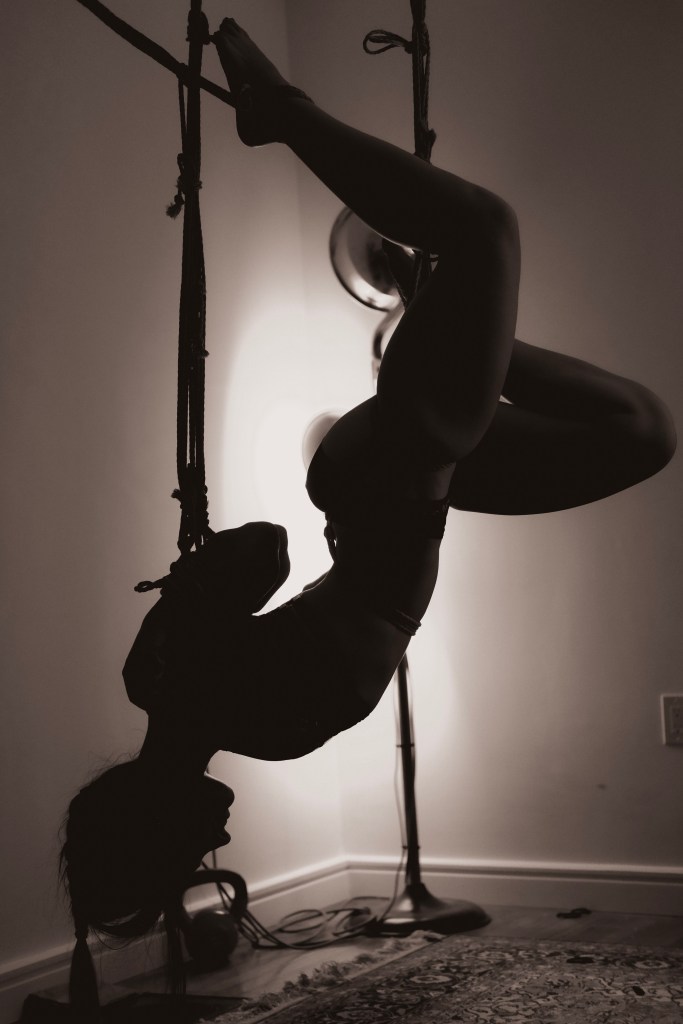
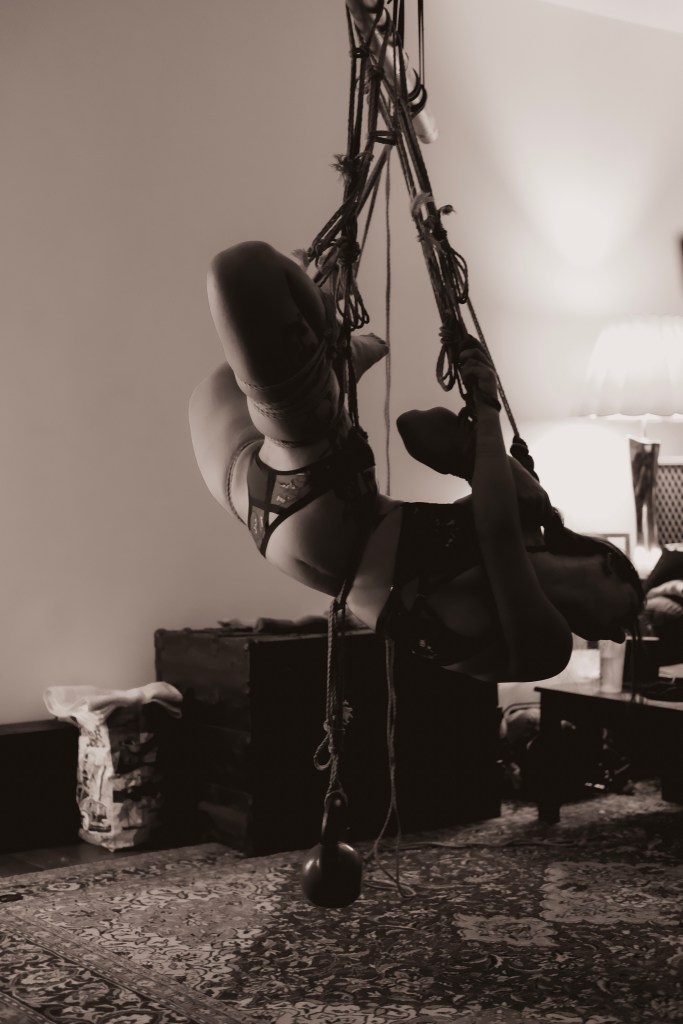
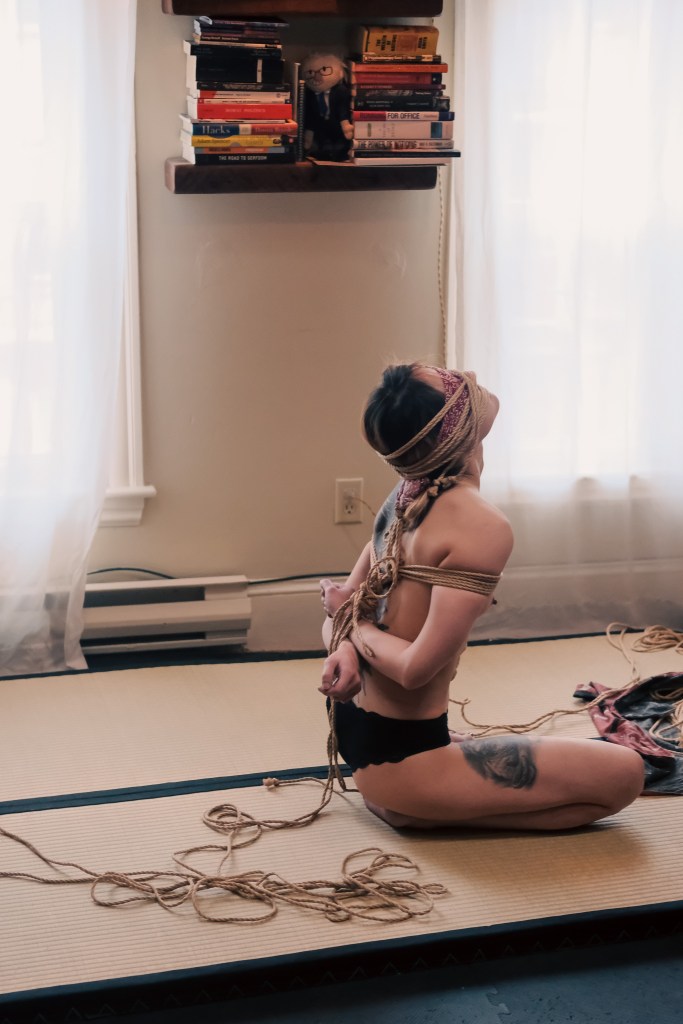
I had the great pleasure of tying my dear friend VioletCaroline again a week or so ago. I should have a lot to say about this tie, because it was very good. VC and I flowed easily from dancing with a single rope to building structure. Improvisational and fast and slow. The kind of tie where at the end you just linger in the afterglow and feel like “this is how I want to tie.” But the details have faded to a blurry haze that matches the blurry pictures.

We did something weird with bamboo.
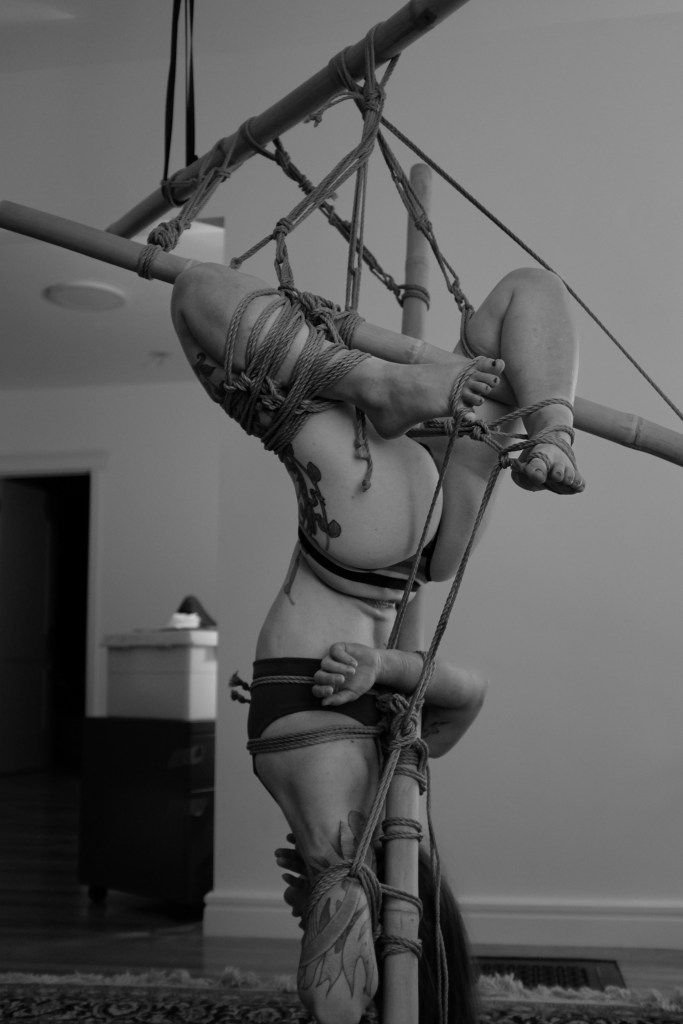
I tried to let the moment linger.

We untied slowly. Mostly, I sat back in admiration and watched her breathe.

This has been a weird couple of weeks in my life, and I’m not thinking about rope very much. Everything has its seasons. But I am grateful for those friends who span both worlds, and that there are still good things in the world. Thanks to VioletCaroline for this tie, and Pinchinawa for letting me use his space ❤
Flight Log | March 2, 2023

There are a number of epiphanies one can have under the harsh fluorescents of a Wendy’s drive through at 2AM. You can mull over the solidarity you share with the other cars wrapped round the block. You can invent a new sign language for the drunk. You can even calculate the exact perfect ratio of sauce packets to fries from a profit vs customer satisfaction rating for the aforementioned company. But, seeing as I was driving home from a party with Vento – it was rope we discussed. 

I awoke next morning to the open notes app on my phone, and a single thought written under an old grocery list – 

Leeks

Flour

Sliced almonds 

..bread

Bottoming – no recipe for perfection, only mindset 

There’s something that happened to me on my rope journey – on the path from manic pixie super-maso, to the precocious switch. Or when I spent a few months convinced I would never bottom again, and then met someone who made me melt back into being tied. Or even my current vanilla phase, which I regard as exceptionally kinky. But right around the time I started to become confident in my tying abilities (far too early) I realized something, I had become a backseat driver. And it was sucking all of the enjoyment out of being tied. 

We have a name for this phenomenon in the scene, “topping from the bottom.” Which has rightfully fallen out of favor as we have become more bottom centric and consent aware in general. I definitely don’t like the way this phrase has been used to shame people for speaking up when there is an issue, but I’ve noticed more and more both in myself and others that maybe we were missing something by throwing this baby out with the bathwater. 

So here is how I see it happen – in the hallways of conventions, or debated hotly over dinner, or explained in excruciating detail in books or video tutorials: The **one perfect detail** that changes the game. In their quest to treat nagging injuries or push past plateaus in their ability to process pain, bottoms start hunting around for perfect recipes. They share tips on how to “lock the shoulders” or how to dress the wraps in the exact right way, and rigger/bottom teams develop an almost superstitious ritual around how they tie certain patterns. 

I certainly did, and it became a self reinforcing habit. The less I bottomed, the less confident I was in my bottoming skills, and the more superstitious I became about how I wanted to be tied. I remember clearly calling a scene a few years ago because my top didn’t dress a line that literally wasn’t weight bearing at all. But, because I had it in my head that this line *needed* to be dressed at X point in the sequence, the fact that he didn’t do that got me totally psyched out. I wasn’t actually being a good, communicative partner, I was just trying to control the scene. 

Looking back I realize it was a defense mechanism for a larger problem – I had lost the will the suffer. But on a recent evening with someone who has known me through a shocking amount of this rope journey, I finally was able to agree that I had gotten my bottoming mojo back. We negotiated as we always do now in the simple code of old friends.  

“What if we do that thing from the 4 riggers video?” 

“I’ll tell you if anything’s too much.”  

And then a TK with the wrong arm put back first, and the nagging voice in my head to ask for an adjustment. But I didn’t, I made the choice instead to see where things would go. And after sinking into it, I found there was no need for an adjustment after all. The tie itself was hard and painful. I thought several times about tapping out, or at least urging him to move faster, give me some relief, but instead I just sat with the pain. I wanted the intensity more, and I knew that I could trust him to bring me through this ordeal without injury, or any unkind motivation. It’s that special dance between the sadist and masochist – a synergy that doesn’t quite make sense unless you’re in it. 

There’s this concept I first learned about in the context of extreme sports: type 2 fun. It’s the suck when you’re muscles are screaming at you to let go of the rock wall and take a break, or when you’re cursing yourself for being up before the sun in the freezing cold for some uphill skiing. The kind of thing that isn’t enjoyable while you’re doing it, but looking back you have this deeper sense of satisfaction. “That was a good day,” you will say after its over. I used to be a real type 2 fun kind of person. That was the shit I lived for. But over the course of a relationship that went bad and lingered far too long, a few catastrophic injuries, and many more insults to my confidence and self-trust that I wont get into, I had lost my stomach for it. 

And during the long middle years of the pandemic I found a way to get back. That’s what Montana did for me. Mostly, type two’s the only kind of fun you can find there. And the isolation and tension of the lockdowns put some recklessness back in me. I would go on to make it a habit to just toss a granola bar in a daypack, take the half full waterbottle off the floor of the car, not tell anyone where I was headed, and throw myself into the woods. Before long you’re out of the reach of the cell phone towers, and you’re just out there. I mean, really, out there. You have to trust yourself, that when you walk 8 miles in you can walk 8 miles out again. And that no matter what you’re faced with, you can handle it. 

I learned to trust myself again- that my body could take the abuse, and that my mind could take the exposure. Sometimes that came from pushing right to the edge of safety and having to run through exhaustion just to keep warm cause I got caught in some bad weather. Sometimes it meant having the wisdom to turn back early when something didn’t feel right in my gut. But for whatever reason I just kept going back out to test myself, and each success reinforced that this was something I could do. I don’t think I can in good conscience prescribe unplanned and under-geared excursions into the deep wilderness as some mental-toughness cure all for the bottom in need of inspiration, but I do think that doing hard things is an incredible gift you can give to yourself. 

Maybe the hard thing is leaving a shit job, or running a marathon. Maybe you’re reckless like me and want to go fight your demons in the bush, or maybe you just need to do a trial class at a martial arts gym. Maybe in fact your hard thing is being tied. All I can say is that seeing rope through this lens has helped me. So here’s to type 2 fun, and no secret recipe that takes the seme out of semenawa. There’s just the thought, as I hung on the worlds suckiest thigh line on display for a crowd of vulgar watchers “I hate this, but I can take this.” And the feeling looking back of “damn, that was a good tie.” 

And as with most epic scenes there are no pictures. But since I suspect most of you readers are actually just here for the pictures, I’ll share some of this memory of type 2 fun with this very dear friend of mine SimplyDiane – back in the place where it all began for our rope fam.  

It was one of those nights with too many people watching, so I started with a blindfold and face rope – trying to bring her attention inwards and make a moment just for us in the crowd.

With so much possible distraction, its nice to keep the rope basic. I tried to just move deliberately and stay present through some basic transitons.

We ended with something a little silly. Ok, I guess rope can also be type 1 fun 🙂

Thanks to Diane for her beautiful bottoming as always!

Flight Log | February 15, 2023

On intrinsic dynamics 

The most common questions I am asked about my rope practice tend to be related to the specific patterns or sequences of ties. While I understand this is a big part of the mystery for new riggers I really think it is the wrong focus. For whatever reason though, most likely related to the huge popular success of Shibari Study or its precursor, the 1 hour con class, it becomes the focus. Don’t get me wrong, you should know at least a couple of patterns. But, I think there is huge value in also paying attention to skills of movement. I discussed this in detail over here as well: https://boshaiart.com/2022/12/30/flight-log-december-30-2022/

But let’s talk about some interesting studies related to this. It will come as no surprise to you that this hasn’t really been researched in the context of rope specifically, but there are many human activities which require inter-limb coordination, timing, and accurate self perception as we move through space. One such example is playing music, drums to be precise. This has actually been studied extensively! 

For most of these studies, participants were either instructed to drum with their hands or with a pair of drumsticks, in time to a metronome that got progressively faster as time went on. They were observed to see what their natural approach to this task would be and then their error rate was tracked when they were instructed to replicate more complicated rhythm patterns. When given a pair of drumsticks there is a potentially unlimited number of combinations of hand heights (or stick angles) the drumsticks can be moved through as a person attempts to make a beat. This is called the relative phase. What we find is that even though there is this huge field of possibilities the person can move through, there are some very strong local minimums. These would be a relative phase of zero, meaning the drumsticks hit at the same moment, and a relative phase of 180, meaning the drumsticks are moving in exact opposite moments – so when one drumstick is all the way up, the other is hitting the drum. This has been shown to be true for about 75% of people studied, with the remaining quarter of people also having a strong local minimum at a relative phase of 90, so when the drumstick is halfway through its path the other one starts to move as well. 

We see this pattern of movement (also sometimes called an intrinsic dynamic) holds true across an incredibly wide variety of actions. Not just in drumming are you most likely to see a phase of either zero or 180 but also with walking, skiing, certain movements in dance, etc etc Interestingly, on a more finely detailed level you can see that the most common relative phase for the two halves of a person’s leg when they are walking is zero. Meaning, the part of the leg above the knee and below the knee moves at the same time as a person takes a step. However, for infants new to walking they have a very unpredictable relative phase until about month 2. As they learn to walk, they try out a variety of different phases until they land on the one which is most efficient. In this case zero.

We can also see that this has some strong implications for teaching adult learners of physical skills to change their movement patterns. Once an intrinsic dynamic is set in stone it can be very hard to change it. If you don’t believe me, try to bang out a drumroll right now on the surface in front of you. And now try it again where once one hand is up 20% of its path, the other starts to move. If you get confused by this and revert back to either zero or 180, don’t be alarmed – that’s normal!

There is also the rather interesting case of Tim Tebow, a former American football star who had a promising career in the NFL cut short by what has been credited as an inefficient intrinsic dynamic. Even though he won the Heisman trophy, the most prestigious award in college ball, and was scouted as a top prospect to join the Denver Broncos, he had a seriously lackluster performance at the pro level and washed out of the game in just 3 seasons. Upon close analysis of his game it was discovered that he carried the ball much lower than other top players, and when he went to initiate a throw, it took him .06 seconds in comparison to the NFL average for quarterbacks of only .04 seconds. This meant that he simply got tackled more often. At the college level where the defensive players were just a bit slower, that extra .02 seconds didn’t make a difference, but when he was playing the best defensive players in the world, clearly it did. 

Further, it was discussed heavily at the time he washed out that his coaches tried extensively to change his form. But after so many years he had spent reinforcing this lower carrying position and longer throw, he just couldn’t change it in time to make a difference. 

Now lucky for us, rope isn’t a competitive contact sport where a .02 difference in timing will win or lose us a game. However, I have noticed that once a weird movement  pattern gets baked into someone it can be very hard to change it. If the movement pattern is harmless, that’s just fine, and in fact it probably adds something to have a unique way of moving as you tie, but more often it stands out that someone is jerking their partner around heavily or causing pinches and minor burns due to the way they are handling the rope. 

I had a student a couple of months ago who knew a ton about rope, and was very proficient at moving through a suspension or tying specific complicated patterns. However, when we worked on a basic exercise where I asked him to tie his partner’s wrists and then draw a single rope around her upper body as smoothly as possible, he really struggled to do this. What I noticed was that as he transferred the rope from one hand to the other he threw his whole arm around his partner to catch the rope on the other side of her body, rather than moving the rope to the waiting hand. We worked on changing this movement pattern, but when the tie got more complicated and he got distracted, that old intrinsic dynamic kept reappearing. 

I didn’t have a good answer for how to prevent this then, but after researching it more there seems to be something to this relative phase that is actually very relevant to rope. When people are presented with a complex series of tasks that involve coordination between limbs they can become overwhelmed by the options and not find their way to an efficient relative phase. We can see that zero and 180 are the most common solutions for these types of tasks but they are far from the only solutions, otherwise nobody would be able to play complicated music! 

That said, based on the research I have done there is an argument for limiting the degrees of complexity at the start, in order to establish good habits as it relates to the movement pattern, before adding other layers of complexity. It is also important to start with tasks which are easily achieved. Another example from sporting we can see is that for youth basketball leagues they lower the height of the basket. Most young players lack the height and physical strength to effectively toss the ball into a full height net, and therefore if they play only on a regulation court they develop poor form which they have to unlearn later. If they instead play on a lowered net where they don’t have to throw their whole body into the ball in order to get it high enough to go in, they develop much better movement patterns. 

In a rope context this is an argument in favor of more minimalistic scenes, and as the common wisdom says, staying on the floor for as long as it takes the rigger to develop efficient movement patterns. It also leads to a question of what efficiency really means in a rope context. For me, it is all about making the sensation of applying the rope as smooth and seamless as possible for your bottom. Even when I make a big movement as I apply the rope, or really push into my bottom and try to raise the intensity, I try to do it with smoothness. Jerking the body, pulling rope too quickly, or causing pinches as we finger hook, all represent not only inefficiencies in the tying technique but negatively impact the bottom’s enjoyment of the tie in my experience.

And anyways, the head game is much more interesting to me than the rope. As on a recent tie with FavoriteBlanket, who requested to play with exposure.

As we moved through the tie, for me it became an exercise in smoothness and restraint. I tried to focus on moving slowly and deliberately through every transition, and really taking my time to press the rope into place as I added the very simple single column ties and minimalist hip harness. I also chose not to remove the clothing fully, as I think there is something much more shameful about being half dressed – as though you have also been caught in a transition moment. Neither fully presentable nor fully naked.

Big thanks to FavoriteBlanket for her excellent bottoming as always, and for coming with an idea to explore 🙂

Flight Log | February 12, 2023


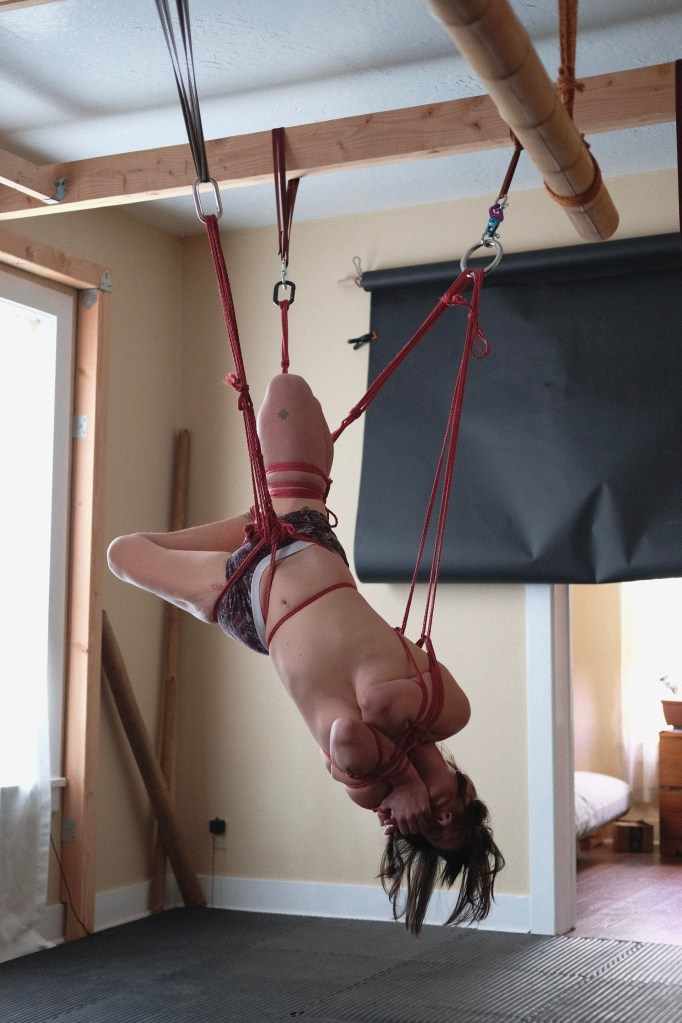
There is a special kind of synergy that comes when you co-tie with people you know very well. Our rope family wasn’t a planned creation and we don’t get to gather as much as we would like, but when we do, we always make something magic. 

This is thanks primarily to our dear friend SimplyDiane, who is just an exceptionally capable rope bottom. But I think equally important is that we have all had ongoing rope relationships with each other, spanning several years. There really is no substitute for time and experience. 

I also think there is something very interesting to co-topping. It’s an exercise I do pretty often, firstly with my students I find it is a great tool to understand someone’s progress. When I co-tie with another top, I can get a very clear sense of how well they read a tie, what their go-to ideas are, and where they may be struggling with fluidity or pacing (or for that matter, where they are doing well!). Co-topping can also bring an extra element for the bottom, to create a more overwhelming sensation being pulled in multiple directions and handled by 2 sets of hands. 

I am also thinking lately about how useful it is to cultivate peer relationships with other tops. Vento and I have spent countless hours critiquing each other’s rope, workshopping ideas, tying each other, and watching each other’s ties. And because we have both really come up together in our tying, the synergistic flow when we do it in tandem is just so smooth. It’s another whole level of play when you are working well as a team and seemingly reading each other’s mind. It also makes me reflect on the ways each of us have specialized. Where I move fast and build structures improvisationally, he is more methodical and precise. We push each other. 

I never would have guessed this weird little hobby would lead to such friendships. But man, I just love these people so much. Thanks for everything ❤
And as is customary, we end with a poem.

Home

Home is a faith called annoyance. 
It’s where people go, when they’re done loving the same woman
as me, an object in motion. A wind who tortures the tree. 
This urban thing, divorced from where it came. A 
dropped seedpod, helicopter spinning to the ground. 
And held aloft, on wires made from grass. A tightrope
walker, running across the street without looking 
both ways, is any way it can be had. And held. 
It can’t be seen, only felt. 
Wind. Damn wind. In your hair, and how it feels on bare skin, 
and how it feels to smash together on a couch, 
warm bodies. 
Talking about the past, in reverence
an elegy. “The good times” 
old days that just get older. 
And it keeps returning, this annoyed thing, 
the cat who wants attention and to not be touched,
the incessant attention paid. 
And faith that she will return. 
To where each cup of tea is shared. 
And this will be home again - 
a temporary permanence. 

Flight Log | February 7, 2023

The primary benefit of owning a car is not the ease with which it allows you to travel from A to B but the fact that it is a culturally tolerated, private, relatively sound proof box, in which to talk to yourself. You can also talk to your cat if you bring her along, or heaven forbid your passengers. But there really is nothing like the ease with which your monologues can flow to the gentle background noise of the road. 

Software developers have long known the benefits of talking to yourself, and the pitfalls of being caught doing so. They invented “rubber ducking” whereby you explain yourself to that small yellow totem normally reserved for bath time, and in the process realize your mistakes. And if my mom is any authority on the art, she uses my dad. Why else would she address long screeds about the neighborhood ladies to him from the kitchen, while he is off fiddling in the garage? 

I know, reader, you’re expecting this to be a blog about rope, but I just don’t have it in me. I’m stressed and I’m tired, and as a result I’ve been talking to myself. By which I mean talking to you, an imagined audience on an interview show, or my dead ancestors, or the shadows of trees on the walls of old brownstones. Anything really. Today on a walk that I overdressed for, in delayed preparation for yesterday’s weather, I rather talked to the air. It’s a bit of an unhinged ritual – you wear your biggest pair of headphones so that no one will try to bother you, and you walk around the city in this particular way. Not being able to hear anything outside of HeadphoneLand, you crane your neck around. Both ways, up and down, now cross. And you listen to the not-very-evolved successor to the language lessons on tape, language lessons on podcast

I repeated in a whisper “de muis eet de kaas” as I rounded a corner near Harvard Sq and was presented with the most incredible sight. Let me paint the scene: a man, silver ponytail on the smack opposite side of a very broad face, one of those woven baja hoodies in cream and teal, wrinkled slacks, and a pair of faded red birkenstock clogs. He blocked my path, his mouth opening and closing like a fish, arms gesticulating wildly, a crazed look in his eye. Reluctantly, I pushed the pad of my headphones off of one ear, dismayed the social contract they represented had been so violated, and realized I was having a stroke. I must have been, because it was not in fact a mime doing his fish act, nor sensible bits of the English language normally spoken in Boston, but something totally alien but familiar – just on the edge of what should have been intelligible. 

After several minutes of this, some meaning finally formed that I could grasp as he asked me in a disappointed way… do you not speak Dutch? Reader, I do not. And I was forced to admit to this poor lost Dutchman that I was only on episode 3 of the podcast series and therefore would only be able to speak with him about what a very small number of nouns and verbs were doing in relation to each other at this very moment. I’m not stuck in the past, and the future doest exist until at least episode 20. To my disappointment he was not particularly interested in learning what a muis eet, and to his disappointment I’m actually trying to learn Flemish. He wished me luck and we parted ways, myself now convinced that I should have carried a rubber duck in addition to the headphones. 

So this is all to say that I have a bit of an announcement about the next chapter in the chronicles of boshai. This move has been in the works for a few months now and the details are just starting to come together: I have the where, Antwerp; the why, work; and the how, airplane. Beyond that, there is only the vaguest outline of a plan and a potentially unhinged confidence in this strange little country of Belgium. This move will also serve as a convenient excuse for all manner of annoying behaviors for at least the next 6 months. If I don’t respond to a message or write a post, I’m sorry, but it’s this move, ya know? 

Anyways, there is something here about rope too. Specifically, about how the rope doesn’t matter one bit without the people. I’ve traveled widely and done my slutty rope top game in many a far flung dungeon. I know what dish to cook to convince a doubtful carnivore about the wonders of vegan cuisine (roasted eggplant with garbanzo beans) and I know an equally crowd pleasing recipe for a rope scene that most people will respond well to. 

It’s been the dominant narrative for a while now that rope is a conversation, thanks in no small part to the work of Barkas (explained deeper in their book “Archeology of Personalities”). But even though it is talked about it is rarely in my experience actually achieved between strangers. More often you will find that you’re talking to yourself. 

And sometimes that’s ok, but there is something here in Boston that I keep coming back to. It seems my strongest friendships still live here, and something hard to place that makes me want to go deeper. On an evening where the new-person jitters had melted away, and a better understanding of who FavoriteBlanket is in ropes. A simple tie that we tapped out on. And something understated in the way she fills the pauses. A waiting that isn’t boredom. 

Thanks to you, my friend!

Flight log | January 10, 2023

There are many ways to find inspiration in rope. I think most of us default to the visual, seeing images of ties others have done. Sometimes we reference the established “masters” of the practice, or just copy what our peers are doing in our neighborhood. Overall I think this is positive – its accessible, fairly straight forward, and gives both halves of the scene the same reference to work off of. The bottom doesn’t have to guess what the top is trying to do, they can see the desired end result before the tie even starts. Maybe you can already guess that this last point is also a potential criticism, and that having this desired image to recreate can really limit you.

I’m always interested in interdisciplinary approaches, finding ways to relate knowledge gained in one area back to rope and vice versa. When I first made an attempt to get better at street photography (it’s still dismal to be honest) the advice that struck out to me is that its all about making opportunities and then noticing when they have been taken. In the case of the street photographer, maybe this means you notice when certain architectural features make a natural frame, or where the light is dramatic, and then you can post up and wait for someone to walk through. At other times you can explore an area in search of vignettes to capture. Both approaches lead to a very different appreciation for the built environment in my experience. When you go out searching for beauty you are more likely to notice it.

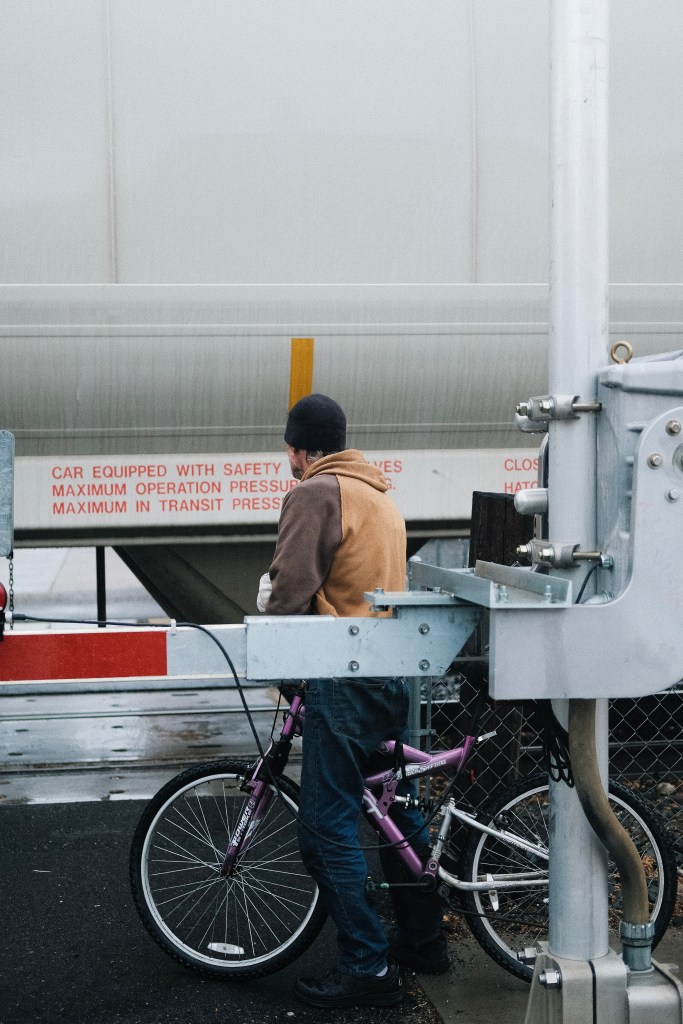
As an example, I attended a music festival in Billings MT a few months ago that had venues on either side of these train tracks. Over the two days we crossed them perhaps a dozen times, and I was drawn to the way the locals got right up close to the huge freight cars. It was very imposing, and seemed like a good opportunity for an image. So I waited until the right character made his way into the frame.


These recent days as I have been walking around Boston, I am again trying to notice opportunities. In this case there is a stream running across the path I take to the gym. At first it was just a pretty feature, but the more often I crossed it the more curious I became about its story, and if I could write one about it myself. It sounds a bit pretentious and goofy, but I really think it is the key to building an engaged life. Moreover, it is a way to practice the mindset of noticing. Ok, a quick break for poems and then we can get to the rope.

And we're in the middle of a conversation about 

How the street names of Dublin
play telephone to the imagined past,
translated and changed from the Gaelic 
to English and ‘back’ as something new. 
And how the Alewife Brooke is no such river, but a road -
where you can walk and be forgiven 
for not knowing that an Alewife is a fish.

No, a train station,
an end point. 

Lives, of these forgotten creatures -
six pence for a pound, a thousand in every net-scoop,
now waiting in the metallic half-life
of an artist’s ugly tribute,
shadowed by storm drain, flattened cans in the shapes of fish. 

And a headstone - crumbling in the way that paper does. 
And herons, fighting, or it might be dancing. 
And water, still - but running. 
Is that all the river is? 
A wrinkle in the land, where water falls? 
Nothing but a path of least resistance? 

A sad fate for an empire, but no less wrong
to put a Starbucks at the colosseum
than make a walking path where deer should drink. 
Or try to know the river now as she is,
where still the gentle tipping of a duck, 
ever forward to the mangled depths,
is reason enough why she remains.
That love, like that, flows in the path of least resistance, 
and the Alewife lives forever -
a direction of travel

Whenever I don’t really know what to do in a tie, I try to go back to these basic principles of noticing opportunities. My lovely friend Favoriteblanket came back for a sunny afternoon tie, and we agreed on a simple enough concept – to make some unusual shapes and create a physical challenge. So we can see how this might play out in real time, when I don’t have a plan or set poses I want to hit in a transition sequence.

When this is the case, I like to start really with anything. Here I tied one side of the body into a half crab tie, to not block the mobility of the upper body as I did in our first tie together by using a TK. I then sat back and just watched how she settled into it – thinking about how I could create a more dynamic shape or move into a more twisted position as we had discussed. Pulling the free arm around the body to add some counter twist and lifting the leg seemed like an obvious choice.

When you add structure you’re simultaneously limiting your options and creating new ones. Tying the second leg into a futomomo restricts the ways you can move it, but now there are two good connections points onto which you can fix an upline. I picked the obvious choice – to open the legs by pulling from the outside of the futomomo.

This created a very beautiful shape, and we explored it making only minor adjustments for a few minutes. But just as a street photographer can pick up and move to a new location, I decided to drop the futomomo and untie it. This had a double effect of increasing the physical intensity by loading all of her weight onto the chest and crab tie, and presented the ability to move into an inversion by loading the ankle.

Finally, there was more twisting on the way down. I tied a hip line while she was inverted and loaded that to take some pressure off of the crab tie, and then brought the leg down to see how she would fold into the hip.

As you can see, she folded very nicely! 🙂

I think the interesting thing in this tie is that there were many places where favoriteblanket could have straightened her body out more. Especially in this last transition, she could have brought the leg to the front of her body – but she chose instead to explore the more contorted shape. Maybe this tells us something, but mostly I think it is just a nice feature to notice and appreciate. Big thanks to her!

Flight Log | December 30, 2022

If you have any interest in rope beyond admiring the pictures, you may have encountered the common problem. Its challenging to learn! Not only are there hundreds of patterns, teachers with different ideas, outdated safety information etc. but the actual process of learning to control your body, and your partner learning to control theirs is difficult. This can be expected. However, it is also not rocket science – so let’s explore the research on how best to learn new physical skills. And if you get nothing else out of this writing, I hope you come away with the knowledge that the body self organizes around its physical practice.

All the way back in the 20s (the other 20s) a researcher named Nikolai Bernstein wanted to better understand how people acquire physical skills, in his case to improve the efficiency of manual laborers. And he found something very interesting when tracking the movements of blacksmiths. What he noticed was that beginner blacksmiths had a very consistent hammer swing – their hand and shoulder tracked in almost the same arc every time with great consistency. But, their output, the actual stuff they were making, was very inconsistent. In contrast to this, expert blacksmiths had very inconsistent swings – the angle and approach they took changed almost every time, but their output of products were all very regular. This was termed the Degrees of Freedom problem.

With a name like that, you can see why this may have relevance to the world of bondage! Now this was not the only study – he also looked at people who chiseled things, people walking etc. but a body of work was built up to where we can start to draw some conclusions about what caused this DoF problem. The hypothesis is that when we first learn a movement, we need to limit the input. In order to simplify the problem, we stiffen up and remove some degrees of freedom – we pull the slack out so to speak. Then, as we become more competent in the limited form of the movement, we begin to explore the available degrees of freedom until we arrive at an optimal point where we feel the skill is mastered. This is not a conscious process, but one which is self managed by the nervous system. Which leads to some very interesting implications for rope educators.

If you accept that the body must self organize, this should change how you approach teaching a physical skill. Let’s take as an example the skill of laying a wrap across someone’s body with good tension. Very skilled teachers can and do show how to hold the rope, explain with which fingers they pinch the strands, and how to draw the lines across the body. But then they get frustrated when their beginner students grab the rope up like a crayon and fist it across their partner’s chest. However, this is a crucial developmental step in the ladder towards mastery! The student needs to first focus on the movement of their whole arm, how their shoulder and hand are tracking, before they can think about what their fingers are doing. It isn’t even conscious on their part – their nervous system is limiting the degrees of freedom.

I have more thoughts on this, but I expect most of you reading this page are not teaching rope. So, it is more interesting perhaps to discuss how understanding this concept can help you get better at tying or being tied, outside of a dedicated class time. I actually think this is crucial for bottoms to understand – so I will use this tie I did with VioletCaroline to explain some of the ways I apply this theory practically.

The way most of us are taught rope is through a series of patterns and set recipes. You’re given a pattern for the upper body, one for the lower body, some uplines, and then shown how to lift them up and down in a set way. This is a great step along the way, and it also works to support your nervous system’s need to limit complexity. But eventually, people get a bit bored and start to branch out – learning new patterns, trying different sequences, and either they start to see minor injuries popping up or they get very lucky. I am about to commit a cardinal sin, by giving blanket advice to strangers on the internet (unasked for!) so here it is. When you start to branch out, you need to do it slowly, and you need to do repetitions of new movement patterns in order for your bottom’s nervous system to adapt to the new movement. The first time you do something, they will very likely tighten up – and you may not even notice it! Which can lead to injuries.

So let’s see what this can look like:
Because VioletCaroline and I have tied several times and I hope to continue to tie her for a long time to come, I wanted to start exploring some different possibilities. This tie started in a very static and straight position – maybe it doesn’t look so from the pictures, but knowing that she is a very physically active person who also is frequently tied, I was fairly secure that her body already knew how to be in a back bend, chiefly supported by the hips, with her spine in alignment.


Staying in this very nice position and coming down would have still been an excellent tie, but I wanted to play a bit more with torsion and explore the idea of untying the tenshi. So next we moved into a more twisted position:

At this point in the tie I noticed that she was using her arms to control the twist of her spine, limiting the range of motion. If we can put this in the framework of the Degrees of Freedom problem – this is very likely the response described by Bernstein, where the body unconsciously simplifies the new pattern before beginning to explore and find the optimal position. I added a kettlebell for intensity, but if you are making a dedicated study of a new movement, and not just keeping these ideas in mind during play time, you should probably skip this step.

Finally, I took her out of the torsion by releasing one leg and allowing her to move into a more aligned side suspension.

I expect this should feel intuitive at this point. If I want to tie my partner in torsions, I should tie more torsions! But, I think it is very useful in deepening your practice with rope to start to pay closer attention to the small details. All of us will develop habits – say we enjoy grabbing the TK from the back, or maybe we prefer grabbing it from the side – but it is easy to not even notice what our habits are – and then on the day we decide to grab the TK from the front, something our bottom has never experienced – we will be at an elevated risk of causing injury. In this case, in order to prepare my partner for something new, and help them to help me grow and explore, I need to go slowly. Bring her into the torsion and out of it, try to not force the desired position but allow her to find it herself, and not giving too many new inputs at once. In that way, she will find the optimal way her body can organize itself inside this new movement.

Luckily, that just means you get to tie more!


Flight Log | December 27, 2022

There’s a book by Richard Hugo I’ve bought 4 times now. One of his collected works of poems, bought, read, and pressed onto anyone I could convince to take it. There was some early desperation to claim a sense of place and understand Montana, and now, stumbling upon it again in a second hand store in Boston I picked up yet another copy. The city names jumping off the page with a burning nostalgia unfit for someone who is not even from there. But so it goes, that place got its hooks into me.

The nature of anthologies in my opinion is that you never finish them and maybe hardly start them. They are meant to be leafed through and consumed in fits and starts. Especially poetry anthologies, where each line is so dense with meaning. So it felt like fate to open to the page describing a familiar place a 10 minute walk from home. I remember the first time I visited the bar and was told to read Mr. Hugo’s poem, finding it immeasurably pleasing how little the place had changed according to his description. And I wrote about it myself, many months later, though it doesn’t really compare to his version.

I originally published this with the below video, which I thought captured a sense of the uncanny I felt on that day I hiked Marshall


The Milltown Union Bar
by Richard Hugo (1973)

You could love here, not the lovely goat
in plexiglass nor the elk shot
in the middle of a joke, but honest drunks,
crossed swords above the bar, three men hung
in the bad painting, others riding off
on the phony green horizon. The owner,
fresh from orphan wars, loves too
but bad as you. He keeps improving things
but can’t cut the bodies down.

You need never leave. Money or a story
brings you booze. The elk is grinning
and the goat says go so tenderly
you hear him through the glass. If you weep
deer heads weep. Sing and the orphanage
announces plans for your release. A train
goes by and ditches jump. You were nothing
going in and now you kiss your hand.

When mills shut down, when the worst drunk
says finally I’m stone, three men still hang
painted badly from a leafless tree, you
one of them, brains tied behind you back,
swinging for your sin. Or you swing
with goats and elk. Doors of orphanages
finally swing out and here you open in.
Untitled 
by Boshai, sometime in 2021 

I met a man with a glass eye named Stu, at the Moose Lodge down the street, which used to be a bar, and still is I suppose - filled with the electric rattle of a slot machine and the tap tap of the child's feet against the bar. And they said no dogs allowed, in big green letters that suggest some recent calamity. I begin to ask the question, but the barkeep waves me off and tells me to throw my coin into the open mouth of the dead Elk on the wall. 

And I was walking yesterday up the mountain touched by change - who used to be a sentinel, then a ski hill, who for several years now lost her snow. And the trees are crisscrossed with degrading cable, where the fire road became cat track became bike path, and the rich ones take their horses or their six thousand dollar machines. And where I walked in my sandals slowly up to the bald head and saw a line of butts cantering down the other side. A line of Elk, just three and massive, confusingly un-deerish in their way that those rarer animals always make you second guess yourself. 
Was that owl really there? That paw print from a bear?

And I tell it to Stu, who looked at me with his mismatched eyes and said "There's more in those hills than Elk, little miss" and took a long drought of his domestic beer. A thousand yard stare, a cough to clear the smoke, and an eerie walk home. And I can't shake the feeling of the fleeting animal shapes in the dark, but what is it about a streetlight that just enforces night?

Flight Log | December 21, 2022

Reflecting on my recent journey East.

There is something strange about driving – I grew up in cities and never owned a car myself until about half way through my time living in Montana. Even when I was selling cable door to door I was hoofing it up the insane hills of Missoula on a beautiful (read: uncomfortable) Cinelli road bike. I sold a lot of cable that summer. The locals felt bad for me.

Of course, I learned to drive when I moved to America at 18. It was included in the total package of cultural experiences: braving Walmart at midnight, watching Mean Girls, eating your weight in fries, and allowing your indoctrination into the great American pastime of pedestrian hating. Its an easy habit to fall into – once you’re past the thinking-about-everything phase of learning to drive, the road becomes hypnotic, and pedestrians have a way of jumping out of nowhere to break your trance. People hate that shit. What I didn’t guess is that hurtling along at 90 Mph eventually gets boring, and my mind writes as it wanders.

Tying can be that way too, if you take the time to tie the same person deeply, over a long period of time.
With thanks to Suidae for giving me that chance.

The one where youre driving across America

Flanked by roadkill and oceanic grasses, you seem to go into the clouds rather than under them. Hollow cities made of grain elevators mark the passage of miles where you find Exit Zero and wonder what's next. The citizen mule deer judge from the fenceline where they make their stand. You get stuck on certain words that flap like plastic tarps caught in the wires of your mind: 

languid

sallow

wending. 

In the expat country people pretend the separation between refugees and (im)migrants- words and categories, without true distiction. Sometimes you stay and judge the leavers, define your staying as noble and new. You eye the three year stint, the old timers drinking at the back of a dive. And then you set out on 
the road yourself, joining in the human flow with a beat down car. You leave the soft echo of a jukebox playing the Ting Tings in a bar. 

Each break for gas gives you the chance to buy the local souvenirs or check the mediocre tinder pool. You read each town's Wikipedia like the news, surprised each one has their own to claim. Learn every town out here was home itself for old Wild Bill or Calamity Jane. And in the mirror turned behind you where home once lived, you see a wild sunset Interuppted by a billboard sign. 
Driving into work before the sun rises

Along a mountain path that follows where a river would, and did I think, some other time flow. Though now replaced with the stream of cars, the massive trucks, and a train car line to shake the dust. And sometimes on a rainy day, before the certain hour comes, their tails reflect in the oily mirror- claws of red like flames against the backdrop of this ancient place. I imagine some science fiction future, where the mundane cars begin to float suspended on their tongues of red. Its beautiful in truth, but a little sad, to see in my mind's eye these racer pods, under the uneasy rain where snow should be already instead. Yet the water pools like pigeon feathers in beautiful swirling piles, where we wanted it months ago and no longer do. And maybe that's always how it is with her, that we run with different clocks.

Flight Log | December 19, 2022

If you are reading this, maybe you know (or maybe you do not) that my instagram account was finally deleted. This has caused me to reflect on my relationship to my creative output and how overly reliant I had become on that platform. Although it proved to be a useful way to share my work broadly, the myriad downsides had started to become too large to ignore.
These include, in rough order of importance:
1. censorship
2. being subject to an opaque algorithm
3. addiction to likes and other dopamine traps
4. focusing too much on follow counts, eg. comparison is the thief of joy
5. limited character count in the caption leading to lack of context

I want to focus in this first log about point five. I have rarely explained my thought process when tying except to my in-person students, preferring instead to share my poems and pictures as stand alone pieces. My hope is that the effect was to create a kind of journal reflecting my daily life – I write almost exclusively about what is right in front of me, and I treat rope as a very normal part of my physical routine. It isn’t something that stands apart, but something which is mundane. Which should not be confused as unimportant or boring, all the best things in life have a touch of the mundane. The ritual of morning coffee, a kiss from a longtime lover, the habit of feeding the cat. Life is full of normal magic.

A study in twisting legs

An exploratory tie with favoriteblanket –
We agreed to aim for something a bit dynamic, so after a nice warmup I met the first stop in the decision tree by choosing a TK. This proved to be a very limiting choice as the tight upper bands blocked the shoulders into place and restricted mobility on the torso. The stemless design also lent itself only to vertical or torsioned positions, as the minimal structure made the TK too unstable to use through many transitions.

However, limits have a way of making things happen. Adding constraints clarifies the available options, and usually listening to the bottom provides many interesting ideas. We talk often about communication often in rope without explaining exactly what that means. In this case it meant waiting and closely watching for the moment favoriteblanket settled into a different position or made an adjustment herself. Based on these clues I decided to pull the ankle up and to the side, where it landed in this very interesting twisted shape.

Note that when the knee is twisted in this angle this can be risky to the bottom. At this point I verbally checked in that it wasn’t painful to the knee, and after adjusting the thigh/waist tie up to raise the other leg, I released the ankle entirely. Pausing here to see where she naturally moved the leg, and how the hip angle changed.

Tying and untying in the air is one of my favorite ways to vary the pace of a scene – releasing structures or building them up to add a different level of challenge to my partners body at the same time as the sensation of being released and re-bound gets inside their head. I used the ankle line to tie a futomomo, pulling it to the highest point in the suspension. When I did this the lines on the other ankle became loose, so I untied them and saw an opportunity to re-cross the legs to create symmetry to the earlier part of the tie.

Using a stemless TK in a fully inverted position is not recommended, as the bands will tend to slide or put pressure lower on the arms where there is greater likelihood of hitting the radial nerve. To avoid this I lowered the TK completely and untied it, before retying the wrists and bringing favoriteblanket into a more compacted position again. For bottoms who are less experienced with rope on their wrists, I recommend creating a long double bight so they can hold onto the knot. While I find people can acclimate to pressure directly on the wrists, it is risky for the nerves, so for beginners I untie immediately when they are no longer able to support their weight by holding onto the rope. From this final position we went to the ground by releasing the waist, ankle, and finally futomomo.

Big thanks to favoriteblanket for her excellent active bottoming!


A disappointed fate

Something as simple as breathing
wrapped in a handmedown coat, 
a generation’s sweat, dry-cleaned out 
and a compliment from the one who knows.  
Messy bangs, scuffed shoes, a bent key ring 
a lock of hair tucked behind the ear. 
And the image of a crane in the clouds - 
a test of where to look. 
There is a brotherhood in women 
facing the ugly world, 
and running streams meet to form a stream.
Buying mugs of soup, penny papers, spinach 
Running hands through hair 
Running hands on skin 
as simple as the breathing